Product Categories
Polyethylene: Sino-US Handshake And Long-term Impact On PE
In the early morning of May 19th, Beijing time, the Sino-U.S. bilateral economic and trade consultations issued a joint statement, declaring: "The two countries have reached consensus and will not fight the trade war." The content of the joint statement stated that China will take effective measures to substantially reduce the trade deficit between the United States and China. In the follow-up, China and the United States will strengthen trade cooperation in energy, agricultural products, medical care, high-tech products, and finance.
Recalling that during the escalation of the Sino-US trade war, the Chinese side wants to impose tariff measures on soybean, agricultural products, automobiles, and chemical products originating in the United States, with a tax rate of 25%, and a polyethylene with a primary shape ratio of <0.94 (LDPE). In it. This time, the two sides reached a consensus that they would not fight the trade war, that is to say, the US LDPE will no longer impose additional tariffs. It is understood that China's annual imports of polyethylene from the United States account for about 6% of China's total polyethylene imports, so whether to impose tariffs will not have a major impact on domestic polyethylene prices in the short-term period.However, we have previously stated that the outbreak of shale gas in the United States will inevitably lead to the outbreak of its chemical production capacity. The production capacity of US polyethylene will also have a large increase around 2020. The data show that if the United States has announced The polyethylene project will be put into operation before 2020, and the US polyethylene production capacity will increase to 24,500,000 tons. By then, the US polyethylene will have an excess capacity of about 3 million tons.
Let us look at the current status of the domestic polyethylene industry.
Supply and Demand Status of Domestic Polyethylene Products
With the successful commissioning of CSPC's Phase II plant, the total capacity of polyethylene equipment in China has reached 17.96 million tons/year. According to statistics from Zhongyu, the current annual demand for PE products in China is around 26.5 million tons (2017 data), that is to say, there is still a supply gap of nearly 10 million tons for domestic PE, and this part of the gap is basically Imported materials cover.
Domestic Polyethylene Production Profits
At present, China's polyethylene production route is divided into two types: oil and coal based on its raw materials. Among them, the profits of coal-based companies are relatively stable, while the profits of oil-based enterprises are greatly affected by crude oil. The recent international crude oil touches 8 again. The profits of oil-produced PE companies have been significantly reduced.
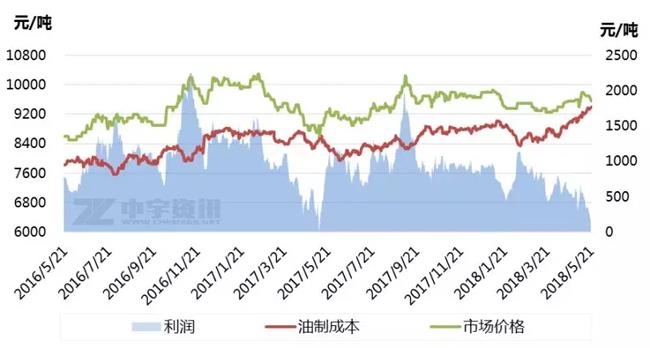
With the rise of international oil prices, and the relatively low level of domestic polyethylene products, the profits of petrochemical enterprises have been significantly reduced, and the price cuts have become more cautious. This also opened the arbitrage window for imported resources in the port area. Polyethylene as a product with high import dependence, if low-price U.S. resources flow out later, it can be foreseen that China will be its key export target, and low-priced goods will also have a certain impact on the domestic polyethylene industry.
The international competition for polyethylene products is increasing, and the game between domestically produced materials and imported materials is also fiercer. At present, domestic polyethylene producers are stepping up efforts to develop more high-end special materials to make up for the gap in the domestic high-end materials market, in order to achieve the purpose of adjusting its own industrial structure and improving the competitiveness of its own products.
Previous: Shanghai Secco Big Explosion, 6 Deaths, PE, PP Prices Have Soared?
Next: Plastic Processing Industry In China Enters A New Stage Of Development
Related News
- Shanghai Secco Big Explosion, 6 Dea...
- Heavy! Plastic Waste Changed From '...
- China Developed A New Material For ...
- 2018 Waste Plastic Company Amulet -...
- Granger Aerospace Launches New LD 8...
- Muskegon Plastics Manufacturer Expa...
- Granger ISS Tornado Shelters Now Av...
- Research And Markets: Global And Ch...
- ROTOVAC Is On Track
- Sileather Application In Marine Ind...
- Plastic Processing Industry In Chin...
- Rising Tides Of Incoming 2018 Envir...
- 3D Printing: God Assists In The Pla...
- The Advantages Of Floating Buoy
- Buoy Level Meter
- Buoy Fixture System
- The Structure Of The Floating Pontoon
- It Is Estimated That 2019 Global De...
- China Plastics City Crackdown Speci...
- Classifications And Characteristics...